
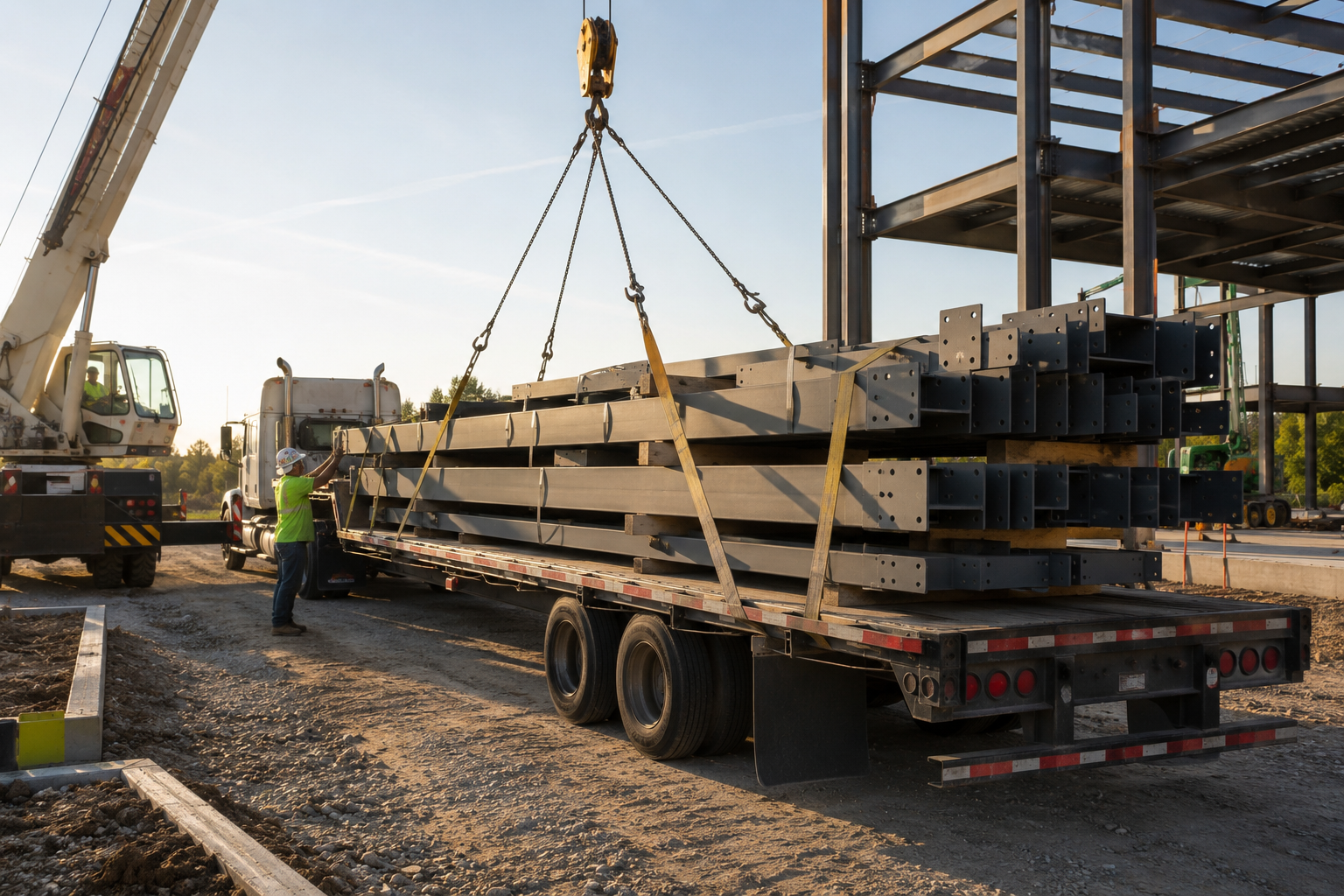
When reviewing a steel project, it can be tempting to focus primarily on tonnage.
After all, more steel typically means a larger project and a higher price.
But as most fabricators know, tonnage is only part of the story.
In fact, two projects with similar tonnage can have dramatically different fabrication costs depending on the complexity of the work involved.
Understanding what drives those differences can help estimators build more accurate budgets and reduce surprises during the bidding process.
Complexity Matters More Than Size
A common misconception is that steel pricing is driven primarily by weight.
While tonnage certainly influences material costs, fabrication labor often has just as much impact on the final price.
For example, a straightforward warehouse structure may require significantly less fabrication effort than a smaller project with complex architectural features, specialty connections, or extensive coordination requirements.
The amount of steel may be similar, but the work required to fabricate it can be very different.
Connections Can Have a Big Impact
Connection requirements are one of the biggest variables in steel fabrication.
A project with simple, repetitive connections is generally easier to detail and fabricate than one that includes custom connection designs, moment connections, or highly detailed connection requirements.
Connection complexity affects not only fabrication but also detailing, review, and coordination efforts throughout the project.
Welding Requirements Influence Labor Hours
Welding is one of the most labor-intensive activities in steel fabrication.
Projects with extensive welding requirements often require more shop time than projects that rely primarily on bolted connections.
The size, location, accessibility, and quality requirements of welds can all affect the amount of labor required to complete a project.
In many cases, labor—not material—is what drives the pricing difference.
Architectural Requirements Add Complexity
Steel that will be exposed and visible often carries additional requirements.
Architectural exposed steel, specialty finishes, hidden connections, and appearance standards typically require a higher level of precision throughout detailing and fabrication.
These projects may not contain more steel, but they often require more time and coordination to achieve the desired result.
Finishes and Coatings Matter
Specialty finishes can have a significant impact on project costs.
Requirements such as galvanizing, specialty paint systems, or additional surface preparation steps introduce extra processes beyond standard fabrication.
Because these requirements are sometimes buried in specifications, they can easily be overlooked during early budgeting discussions.
Schedule Pressure Affects Pricing
How quickly a project needs to be completed can influence pricing just as much as the scope itself.
Accelerated schedules often require additional coordination, production planning, and scheduling flexibility. Even when the steel package remains unchanged, compressed timelines can affect how the work is executed.
This is one reason two nearly identical projects can receive very different pricing.
Coordination Requirements Add Time
Steel rarely exists in isolation.
Projects often require coordination with concrete contractors, mechanical trades, equipment suppliers, glazing systems, and architectural elements.
As coordination requirements increase, so does the effort required to move the project smoothly from detailing through fabrication and installation.
These factors may not be visible when looking at tonnage alone, but they often influence overall project cost.
Last Words
Tonnage is an important part of steel pricing, but it rarely tells the entire story.
Connection complexity, welding requirements, architectural details, finishes, schedules, and coordination all play a role in determining the effort required to complete a project.
Understanding these factors can help estimators build more accurate expectations and better evaluate why projects that appear similar on paper can price very differently.
If you ever have questions about steel scope, budgeting, or fabrication requirements, our team is always happy to help.